2026-11-12 · AI Manga Translator
Manga Honorifics and Translation Styles: -san, -kun, -senpai Compared on a Real Page
What Japanese honorifics like -san, -kun, -chan and -senpai mean, why translators disagree about keeping them, and how the same manga page reads in Standard, Keep honorifics and Faithful styles.
Japanese honorifics are the suffixes added to names, such as -san, -kun, -chan, -sama, -senpai and -sensei, that show how characters relate to each other. English has no direct equivalent, so every manga translation has to decide whether to drop them, rephrase them or keep them. AI Manga Translator lets you choose: Standard drops them, Keep honorifics keeps them, and Faithful keeps them along with other Japanese terms. Below we translate the same page in all three styles and compare the actual output line by line.
What the common honorifics mean
| Honorific | Typical use | Closest English feel |
|---|---|---|
| -san | Polite default for adults and people you don't know well | Mr./Ms., or just the name |
| -kun | Boys and younger men; also juniors at school or work | Friendly, slightly informal |
| -chan | Children, close friends, cute or affectionate address | Affectionate nickname |
| -sama | Great respect: customers, nobility, someone revered | "Lord", "Lady", "Master" |
| -senpai | Someone senior at school, a club or work | "Senior" (no natural English word) |
| -sensei | Teachers, doctors, manga artists | "Teacher", "Doctor" |
| No suffix (yobisute) | Very close relationships, or deliberate rudeness | Just the name, which can read as blunt |
The suffix often carries the story: a character switching from Tanaka-senpai to plain Tanaka can signal a relationship changing, and that shift disappears when every honorific is dropped.
Why translators disagree
Official English publishers don't follow one rule. Some drop honorifics entirely and express the relationship through word choice; others keep them, especially in school and romance series. Fan translations (scanlations) almost always keep them, so many long-time readers find their absence jarring. Senpai is the most debated: there's no single English word for an upperclassman you look up to, so translators either keep it or rephrase every line it appears in.
Neither approach is wrong. Natural English is easier for new readers; keeping honorifics preserves nuance for readers who know them.
The same page in three styles
We translated one original four-panel page, in which a first-year student brings her senior Tanaka a homemade lunch, in each style. These are the actual translations the tool produced, not edited examples.
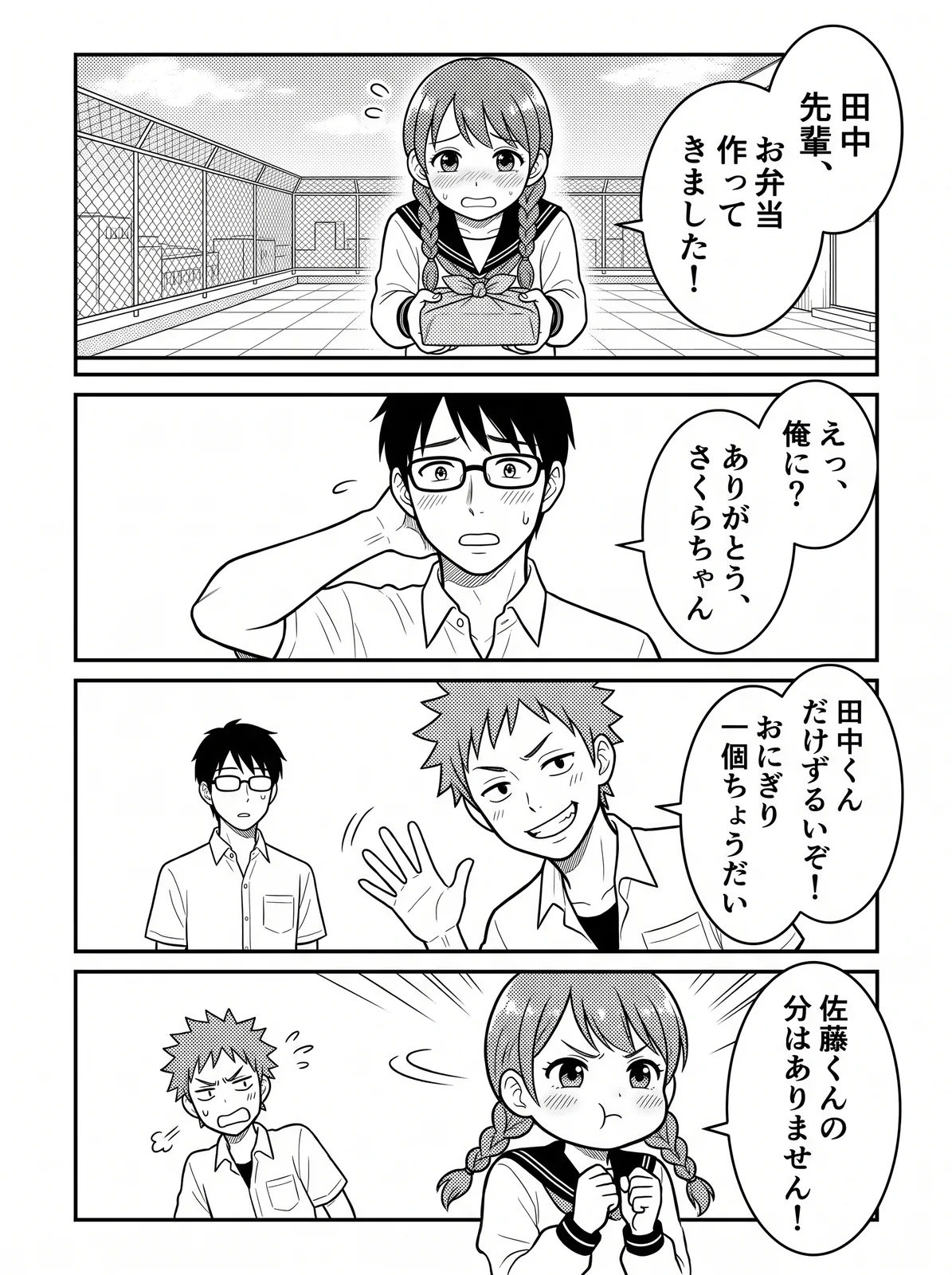
| Original | Standard | Keep honorifics | Faithful |
|---|---|---|---|
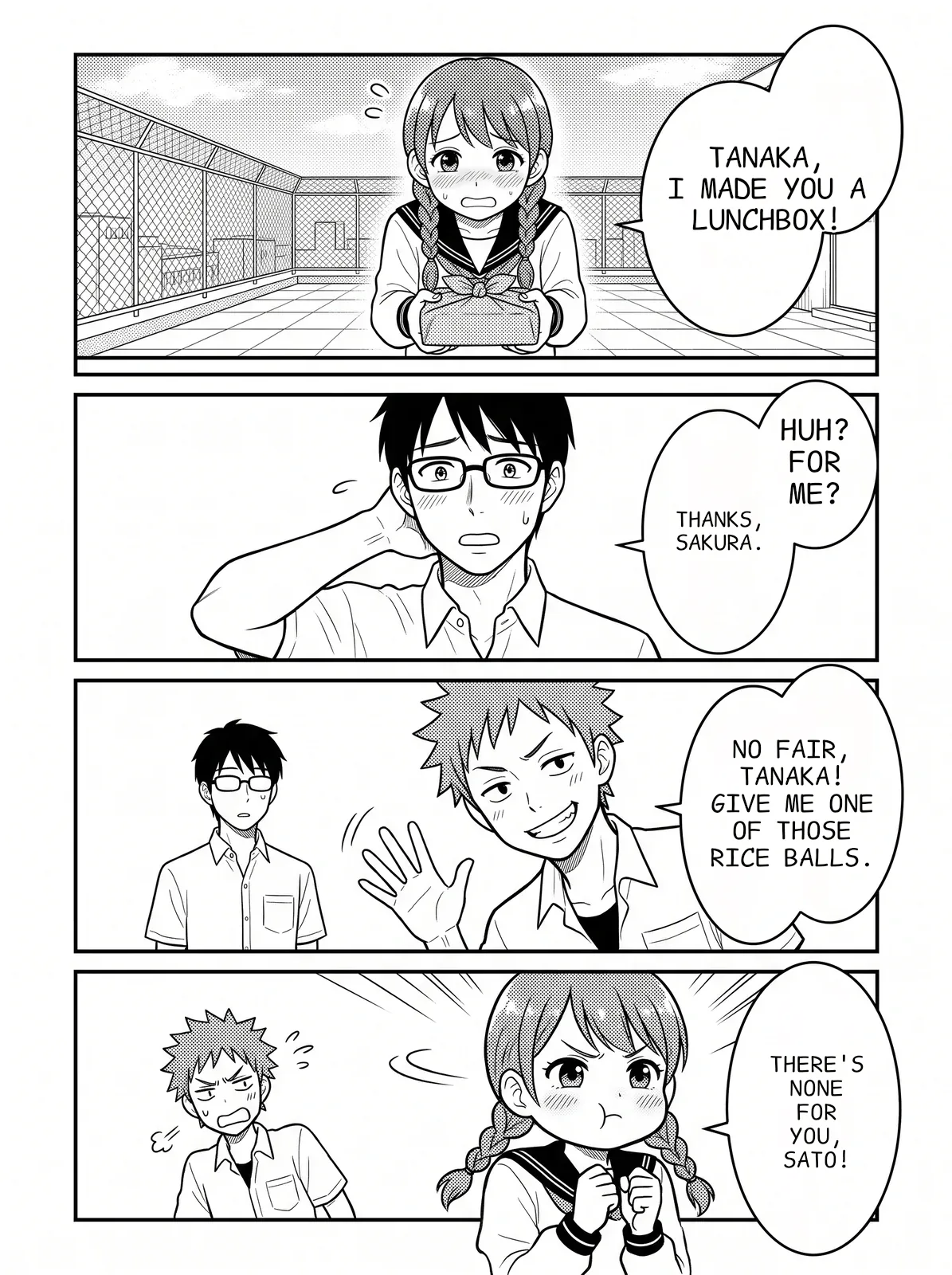
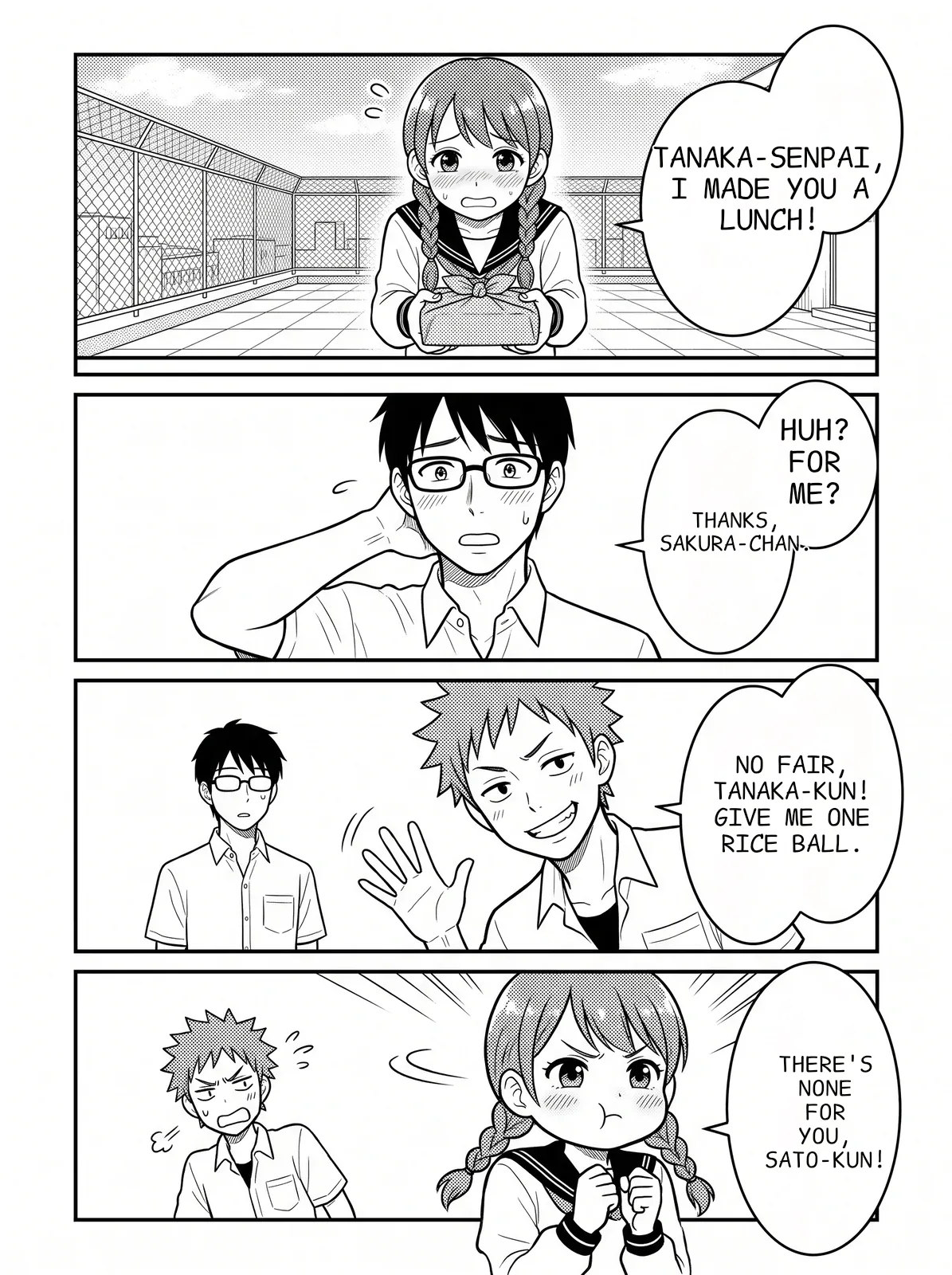
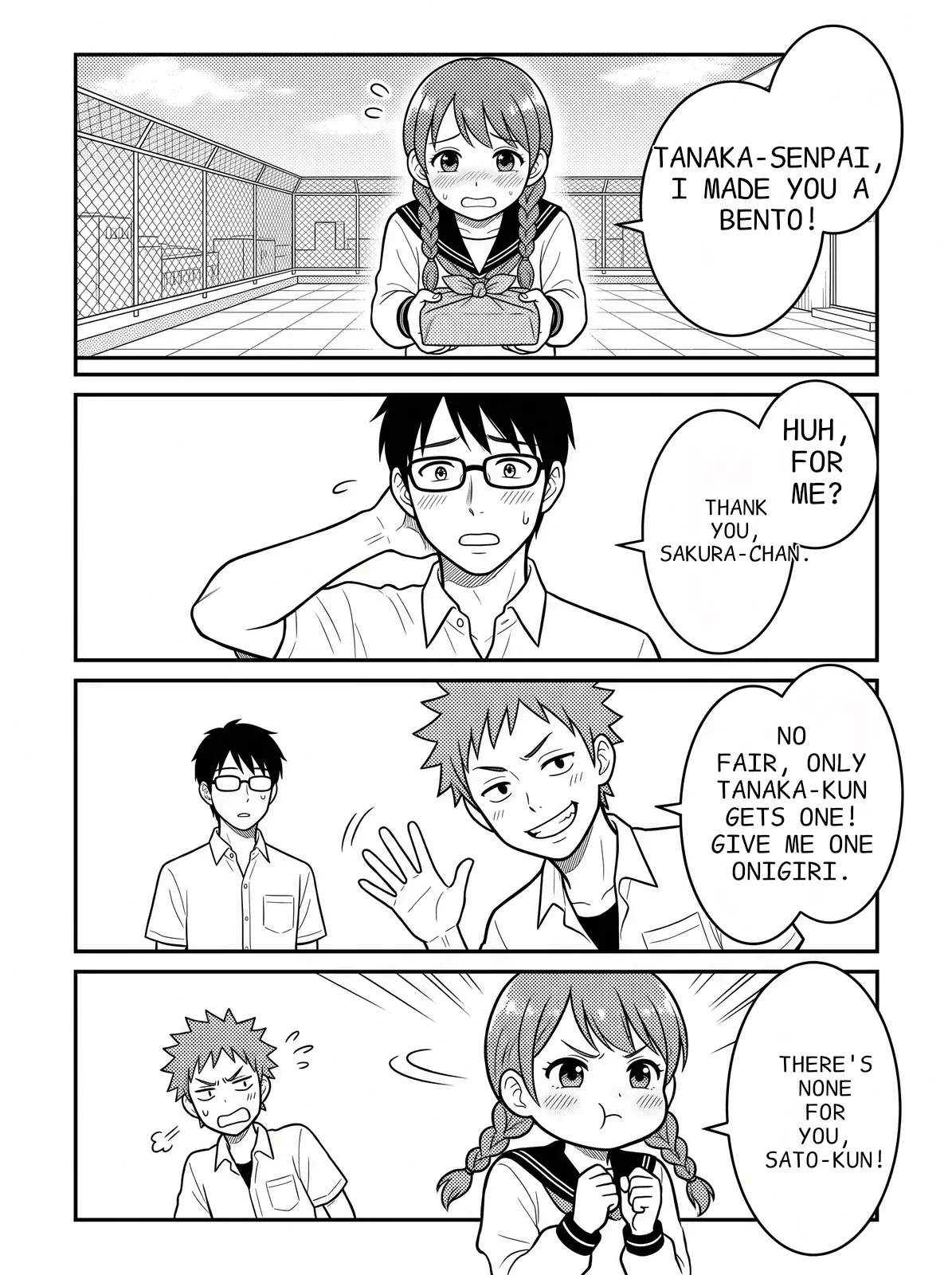
| 田中先輩、お弁当作ってきました! | Tanaka, I made you a lunchbox! | Tanaka-senpai, I made you a lunch! | Tanaka-senpai, I made you a bento! |
| ありがとう、さくらちゃん | Thanks, Sakura. | Thanks, Sakura-chan. | Thank you, Sakura-chan. |
| 田中くんだけずるいぞ!おにぎり一個ちょうだい | No fair, Tanaka! Give me one of those rice balls. | No fair, Tanaka-kun! Give me one rice ball. | No fair, only Tanaka-kun gets one! Give me one onigiri. |
| 佐藤くんの分はありません! | There's none for you, Sato! | There's none for you, Sato-kun! | There's none for you, Sato-kun! |
What changes between the styles:
- Standard reads like an English-language comic. Senpai, -chan and -kun are dropped, and bento and onigiri become "lunchbox" and "rice balls".
- Keep honorifics keeps every suffix attached to names but still uses everyday English words for food and objects.
- Faithful keeps the honorifics and the Japanese terms, and translates every part of each line: "only Tanaka-kun gets one" keeps the jealousy that Standard compresses into "No fair".
Here are the three finished pages:
Which style should you choose?
- Standard if you want manga to read like any English comic, or you're sharing pages with friends new to manga.
- Keep honorifics if you follow school, romance or workplace series where who-calls-whom-what matters, but want natural English otherwise.
- Faithful if you're used to scanlations, you're learning Japanese, or you want nothing shortened. Lines can be longer, so text in small bubbles may be set at a smaller size.
Still undecided? In the translator, choose Try all three styles: each page is translated in all three styles side by side for one page credit, and you can switch between them before translating the rest of the chapter.
Korean manhwa has honorifics too
Korean uses its own forms of address: -ssi (polite, like -san), oppa and hyung (older brother figures, depending on the speaker's gender), unnie and noona (older sister figures) and sunbae (senior, like senpai). The same three styles apply: Standard rephrases them, Keep honorifics keeps them, and Faithful keeps them along with other Korean terms. See How to Translate Manhwa and Webtoons.
Frequently asked questions
Should manga translations keep honorifics?
It depends on the reader. Dropping them gives smoother English; keeping them preserves relationships and tone. Many readers prefer to keep them for school and romance series.
What does senpai mean in manga?
A senior at school, in a club or at work. It implies respect, and in romance stories often admiration. English has no single equivalent, which is why many translations keep it.
Can I keep honorifics but still get natural English?
Yes. That's what the Keep honorifics style does: suffixes stay attached to names, while the rest of each line is translated into natural English.
Does the style change the price?
No. Every style uses one page credit per page, including Try all three styles.